
It’s easy to think that France has always been one big ‘happy hexagon’ (referring to its current six-sided geographical shape), a uniform cultural entity that was and always has been FRANCE. But this is far from the case. France’s official borders have expanded and contracted over the centuries like an accordian, and various French regions have comprised at times other countries and states, hence France’s current rich melting-pot of different architectures, histories, customs, cultures, economies, art, artisanal heritage, gastronomy, cheeses(!), languages and more that we find so fascinating today. One could think of it a bit like medieval Italy which was composed of small, independent republics, although in contrast France did have a generally powerful monarchy running alongside its eventful political and geographical journey to the modern France we know in our day.
So why is this interesting? As I often note in my French culture talks in the U.S., la France actuelle is about the size of the state of Texas yet holds several lifetimes worth of cultural and geographical adventures and explorations. ‘There is always something new to discover about France!’, I like to say. The marvelous regional differences all over this one nation make it seem as if France is really many countries within a country. And it is precisely this aspect that makes France worth traveling to again…and again…and again.

In this week’s post, you’ll find a brief description of two of the very intriguing regions of France which had their own independent history for a time and then eventually folded into le royaume de France (the kingdom of France) – Normandy and Burgundy. (Others include Provence, Aquitaine, Brittany and more – I’ll have to elaborate on them in future posts!) My husband and I are big map people, and we love poring over France maps of every type and vintage. It stands to reason that an important component of my French Kings and Queens lecture series includes studying the maps of the expanding and contracting French kingdom from around 500 AD with King Clovis, through the Middle Ages, on to the French Renaissance with King Francis I in the 16th century, past the tumultuous French Revolution, and up to more modern France as it coalesces in the 19th century. For example, on a map of Europe, Normandy was its own separate duchy and then went back and forth between the French kingdom and its independence until the 15th century when it officially became part of France. Given their unique stories, these locales are top French destinations for visitors and where I take travel guests on my insider trips to France…
Normandy, Northern France
La Normandie is the land of beautiful towns and half-timbered villages, the bustling capital of Rouen, ports such as Honfleur and Le Havre on the English Channel, abbeys and churches, chateaux and gardens, apple orchards, green meadows, grazing cows, luscious cheeses, butter, cream, seafood and Calvados the famous apple brandy. The word Normandy originally comes from the word for ‘Northmen’ in several Scandinavian languages, a telling reminder of the conquest and settlement of the province by the Vikings from the north and their leader Rollo around the 9th and 10th centuries. In time, as the first Duke of Normandy, Rollo paid fealty to the king of France legalizing his status; his tomb is today located in the Cathedral of Rouen whose facade was painted so gorgeously in various lights by the Impressionist Claude Monet in the 1890’s.

Over time, the Normans intermingled with the local Gallo-Roman culture, developing their own regional heritage. Rollo’s descendant Duke William of Normandy, aka William the Conqueror, became king of England in 1066 at the infamous Battle of Hastings which is recounted so splendidly in the Bayeux Tapestry. About 250 feet long and about 2.5 feet high and in my view one of the top 25 sights to see in France, this stunning embroidery located now in Bayeux depicts the momentous events leading up to the battle for the right to England’s crown. But almost more fascinating are the appearance, clothes and customs of the numerous characters along with animals and boats of the period. This co-mingling of the Duchy of Normandy and southern England is visible even today with similar architecture, culture and shared language and words between English and French (it is said that the two languages share about 40% of vocabulary!). Normandy became officially part of the Kingdom of France in the 15th century though the title of Duke of Normandy was used an a honorific up until about the French Revolution. Today, Normandy is close to Paris but is a stunning region fully Norman in culture, countryside and cuisine. Click here more information on our ‘Wonders of Normandy 2020’ tour this fall.

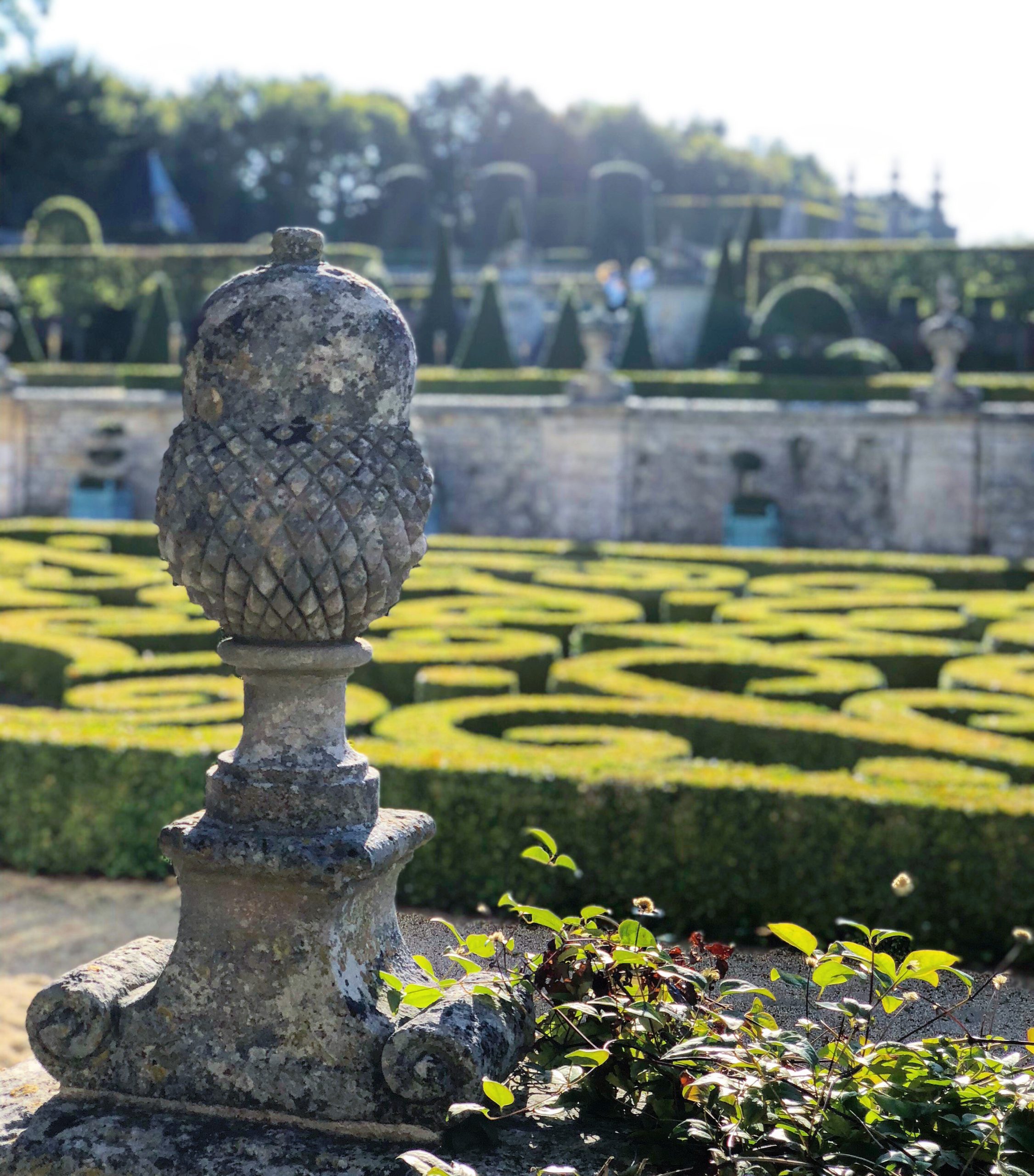

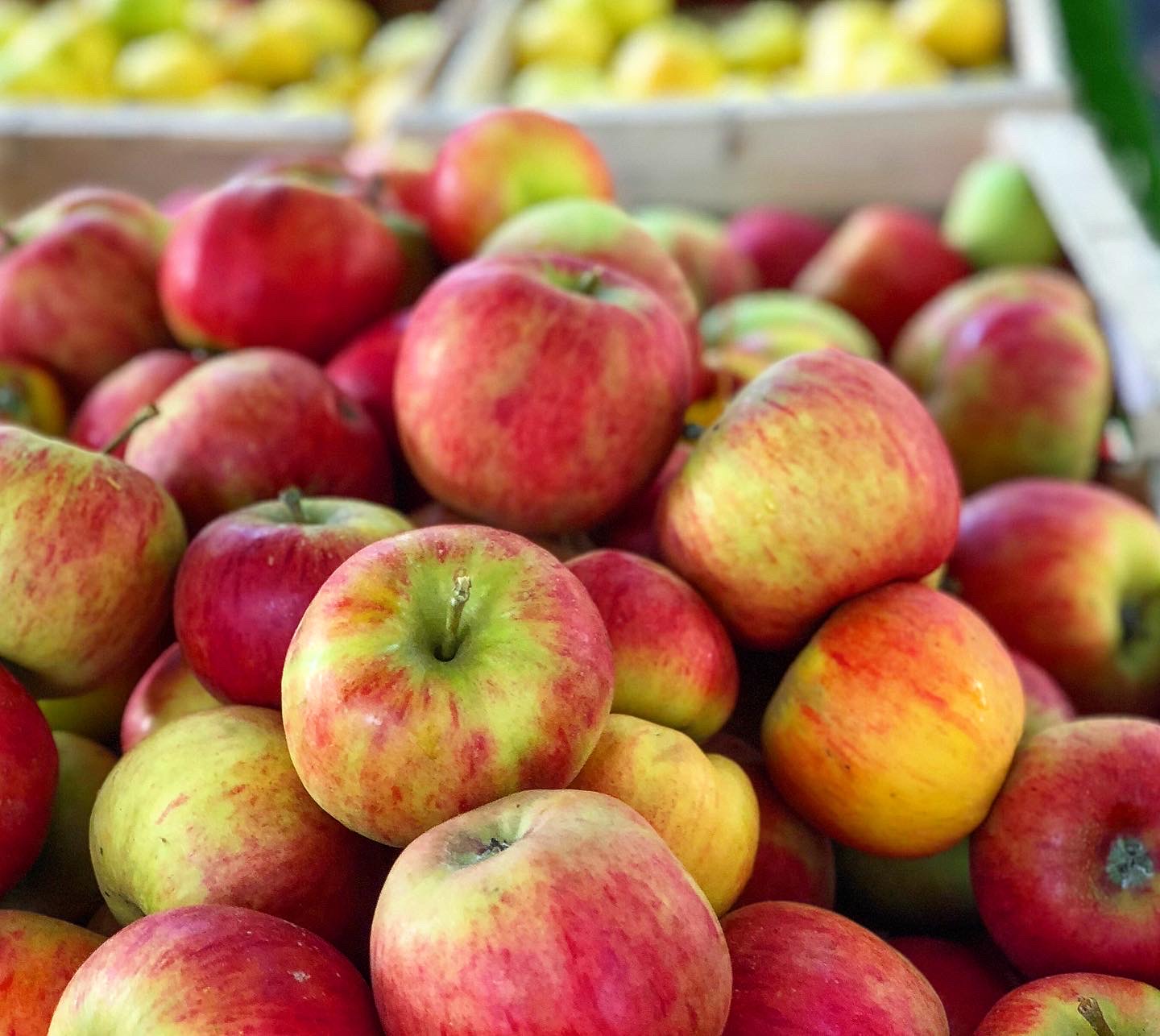
Normandy Photos: Capital of Rouen, Port of Honfleur, Gardens of the Chateau de Brécy, Abbey of Mont St. Michel – I am with travel guest Dr. Lori Stetler from Dallas, Normandy Apples at the Bayeux Market.
Burgundy, East central France
Burgundy owes its name to the Burgundians, a Germanic people who came into eastern central France as the Roman empire waned in the 5th century. The Franks (from whence France gets its name) took over la Bourgogne in the 6th century and in 1004, Burgundy became part of the Kingdom of France. The 11th through 13th centuries saw the blossoming of Christianity in Burgundy with the development of key churches and monasteries such as Vézélay, Citeaux and Cluny. Cluny was the largest church in Christendom until St. Peter’s was built in Rome!
Things really got interesting on the France political scene when King Jean le Bon (John the Good) of France (House of Valois) offered the Duchy of Burgundy to his youngest son Philippe le Hardi (Philip the Bold). Very quickly the Duchy of Burgundy became a formidable competitor to the French crown through wily politics and extremely opportune marriages. The territory of Burgundy then extended from near Switzerland up through the Netherlands, most notably Flanders and the Brabant, Belgium and Luxembourg. The powerful Dukes of Burgundy were skillful businessmen and extravagant patrons of the arts, employing artists and artisans from the Netherlands to embellish their life and image in their capital of Dijon and elsewhere. This was the golden age of Burgundy in every way – with the court of the Burgundy Dukes threatening to outshine that of the French king both culturally and economically. Our American readers may remember the tremendous exhibition called ‘The Mourners: Medieval Tomb Sculpture from the Court of Burgundy’ which traveled all around the USA from 2010 to 2012. While the Dijon Fine Arts Museum was undergoing renovation (for 10 years – it just reopened again in May 2019!), the stunning and moving alabaster sculptures of figures in mourning made for the Burgundy dukes’ tombs went on tour for the first and last time. The Dallas Museum of Art among others hosted these fine examples of 14h and 15th medieval sculpture by Flemish artists.
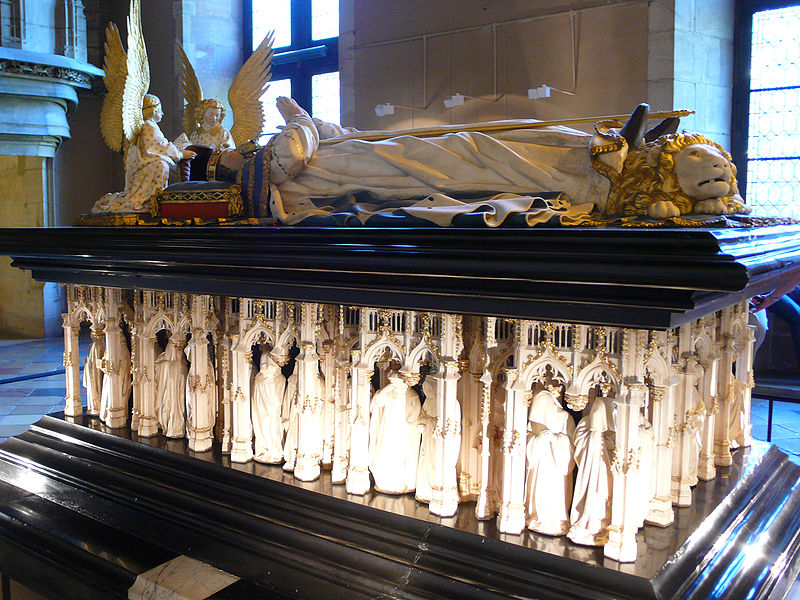
Not all was fairytale-like during the reign of the Dukes of Burgundy however. It was in fact the Burgundian faction who helped deliver Joan of Arc over to the English, resulting in her untimely death at the stake in 1431 in Rouen in Normandy. And then of course, the Burgundians switched sides and allied themselves with the French. In 1477, the last Duke of Burgundy Charles le Téméraire (Charles the Bold) was killed in battle as part of the Burgundian wars. La Bourgogne became part of France, greatly expanding her territories. Today, Flemish influences are very visible in this rich and ancient province – see the photo of the Hospices de Beaune below, one of the top 25 sights to see in France. This 15th century hospital actually cared for the sick until the 1970’s. And we haven’t even delved into the highly prized Burgundian wines which the monks made into a fine art in the Middle Ages, discerning which grapes would grow best in which soils. Their legacy lives on into the 21st century! Click here for more details on our ‘Best of Burgundy and Lyon 2020’ tours this fall.

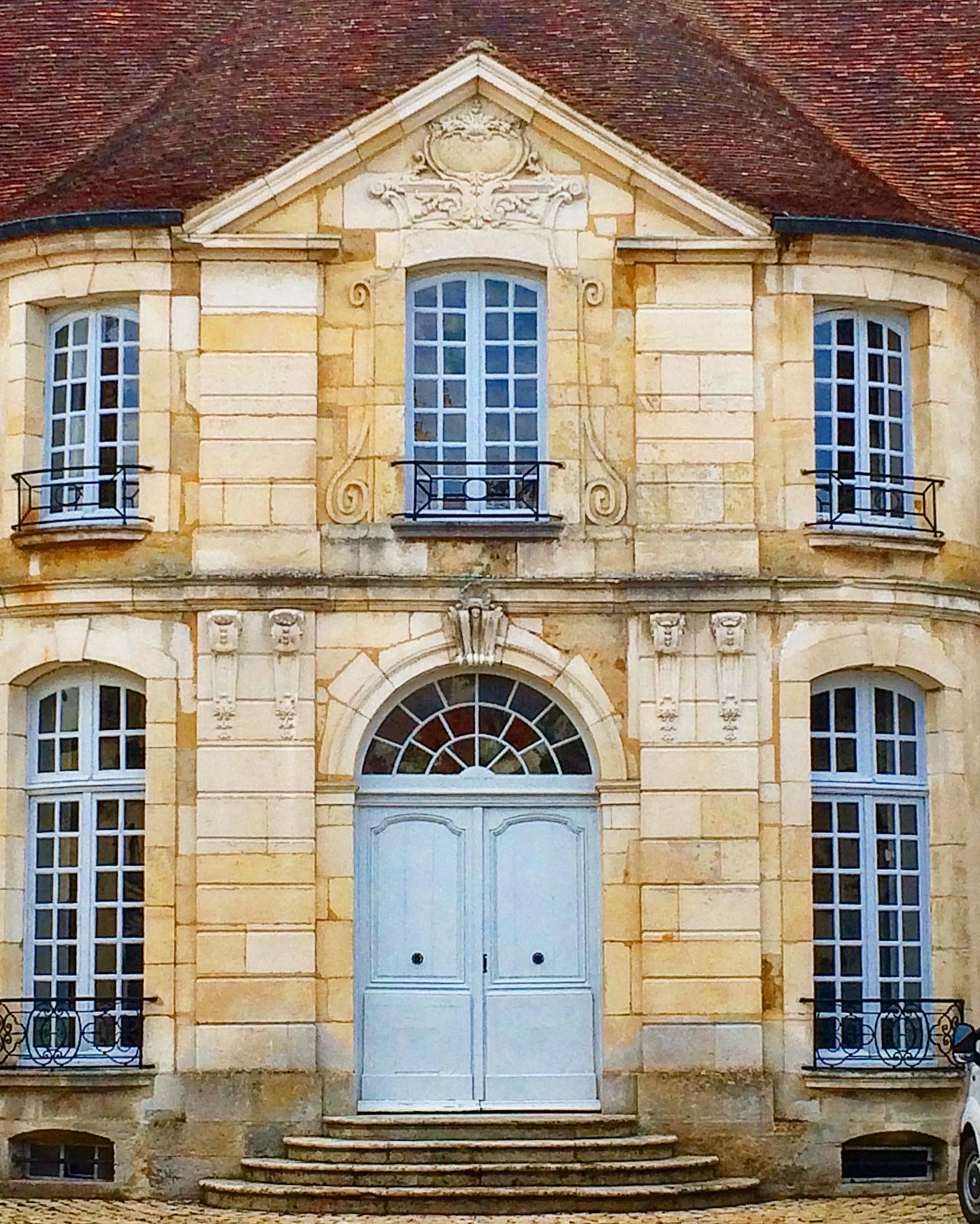
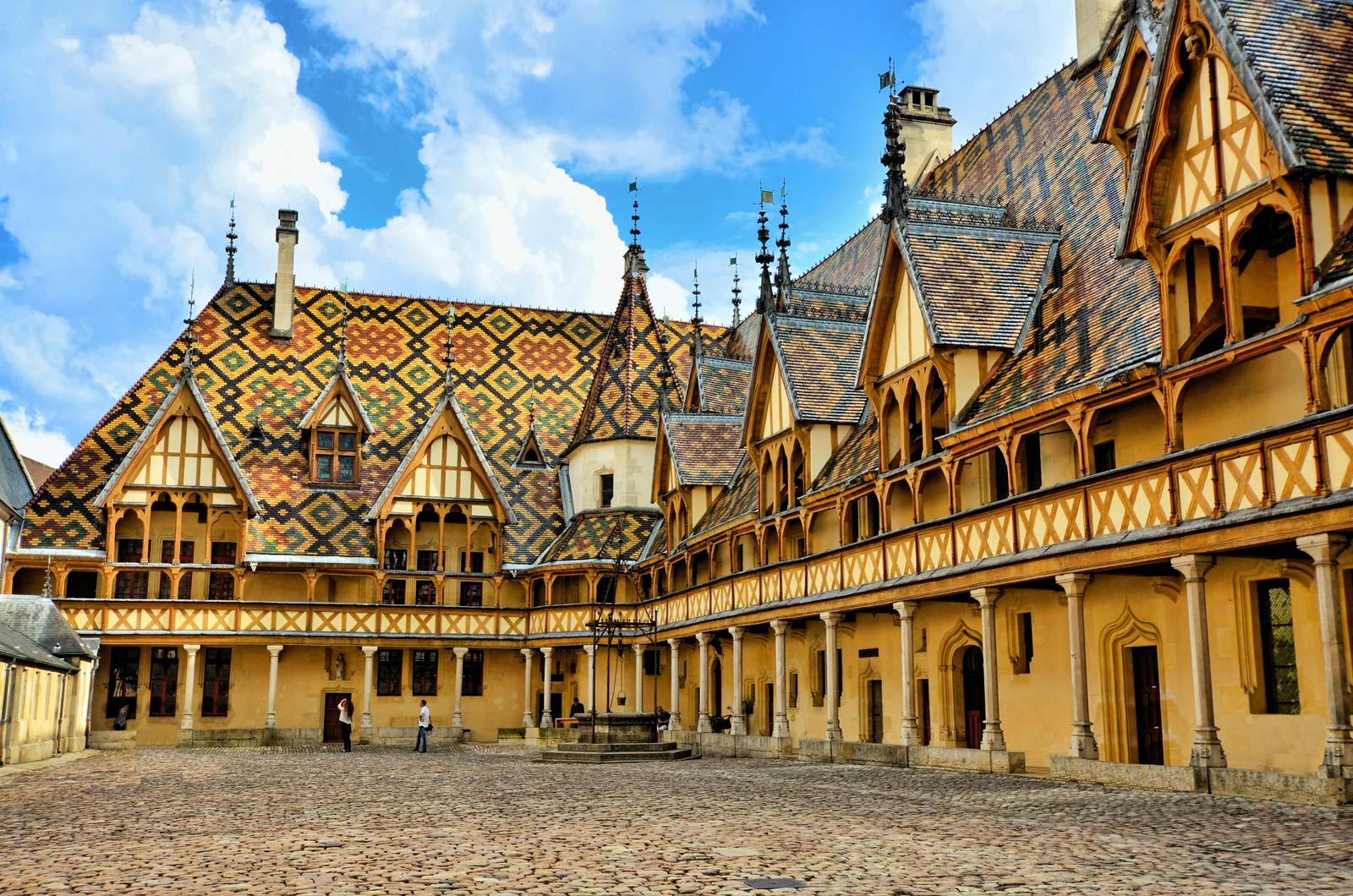
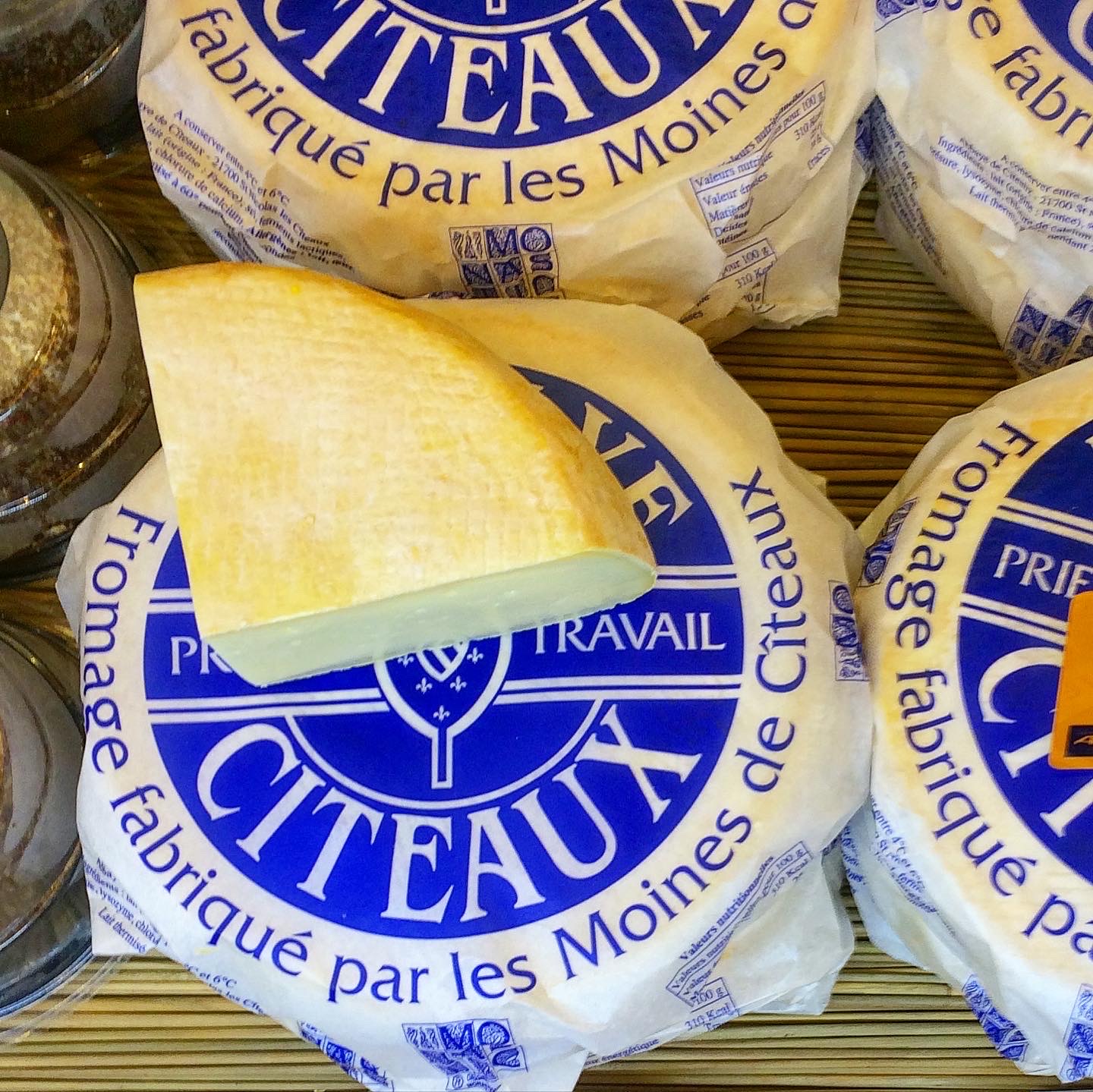
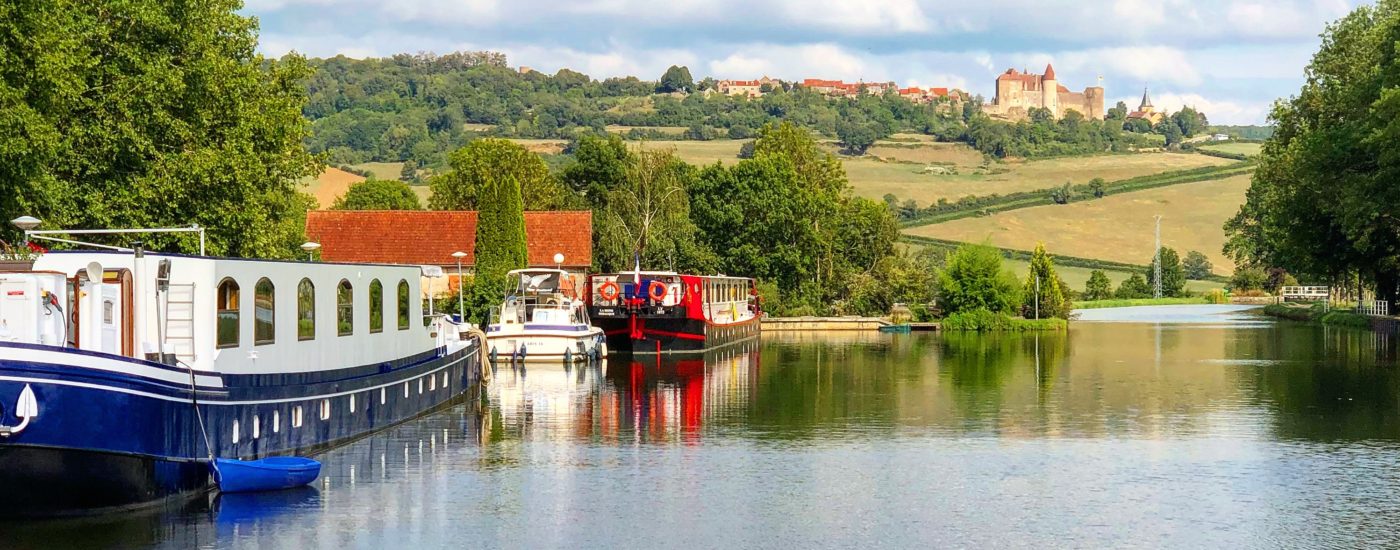
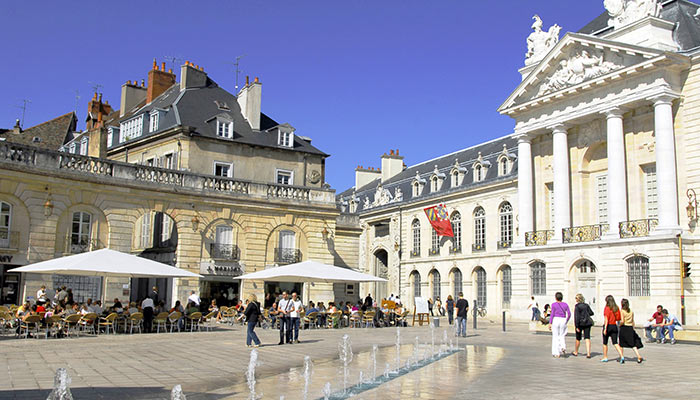
Burgundy Photos: Palace of the Dukes of Burgundy Dijon, Fine Arts Museum Dijon, Burgundy Canals, Town of Semur-en-Auxois, Hospices de Beaune, Burgundy Cheeses.
A NOTE ABOUT FRENCH AFFAIRES TRAVEL: Our trips to France are among the world’s finest, and our trip guests are the best! Our travelers have a great time together and often become lifelong friends – all united around their passion for France. French Affaires founder Dr. Elizabeth New Seitz personally designs and hosts each of these exclusive travel experiences. For more information on our limited edition tours in 2020, please click here or contact Elizabeth here. Come join us for a fabulous French experience in the most beautiful country in the world – I look forward to going deeper into France with you!

Loved reading this. I recall reading somewhere that the French army had problems in WWI where a fair number of the soldiers did not actually speak French, but spoke one of the regional dialects. And some of them paid the price when unable to respond correctly to a challenge from a sentry. (I still have trouble understanding people from Provence.)
Thanks so much, Jim! That sounds right about WWI – amazing all the cultures and languages that have come together to make up France.
And so true about the Provence accent…that twang takes some getting used to…but it’s charming nonetheless.
Stay safe and prenez soin de vous!
Wonderful! Thanks Elizabeth. Your photos are fantastic!
Wish I could join you.
xo❤️xo
sali g.
Merci, Sali! Appreciate your kind comments. Keep joining in via the newsletter or come join me at an SMU talk sometime. Would love to see you.
Stay well – prenez soin de vous XOXO
Elizabeth
I love the class that I’m currently taking with you, but now I will enjoy your blog! I actually have an ancestor, my great-grandmother, from the Alsace region of France who spoke only German. It will be quite interesting to learn about the different regions of France, and it will perhaps give me something to talk about at dinner ;D
Thanks so much for taking the France for Travelers class, Melanie! And for following along on the blog. Yes, the French regions are so fascinating…And what a heritage with your great-grandmother. Great dinner conversation for sure. Hope to see you again soon!
Elizabeth
Great article! I recently relocated to France with the help of http://www.avvinue.com, I don’t know if you’ve heard of them? However, Yes. France has so many beautiful cities to visit, so much so, that they appear to be “countries within a country.” Can’t wait to fully explore all that France has to offer. Thanks for the insight! Amazing!