

If there were ever a perfect spot on earth, the Château and Gardens of Brécy in Normandy would come very close. Situated in the rolling green countryside near Bayeux not far from the English Channel, this extraordinary estate fuses several epochs and several garden experiences into one magnificent locale. While Brécy can trace its roots back to the Middle Ages and the Renaissance, its soul and spirit embody the baroque exuberance of 17th century France.
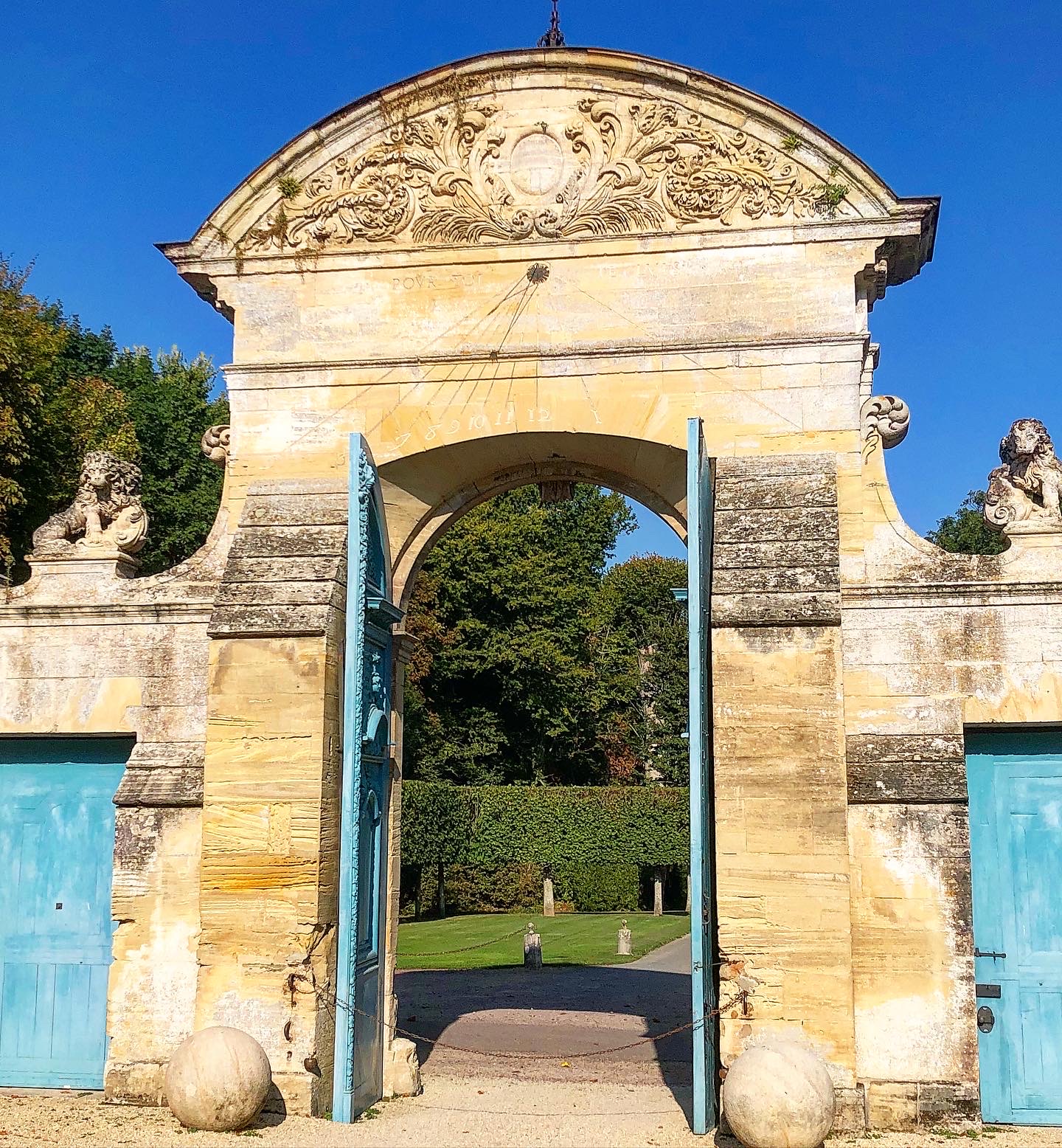
Even though its early historic records are incomplete, experts believe the stately yet modest Louis XIII style Château de Brécy was built between 1626 and 1636 by a Philippe Labbey. Interestingly, Brécy’s architect remains unknown but may have been influenced by the celebrated Francois Mansart (of mansard roof fame) who designed the neighboring Château de Balleroy around the same time. Purchased in 1638 by Jacques Le Bas the first, a successful man of his times, the manor house and surrounding property evolved into a grand estate with surprisingly sophisticated gardens for a rural setting so far from Paris and the royal court. The grand entrance gates were likely added during this period.
Notable too was the integration of house and gardens into one harmonious whole, a novel idea developed almost simultaneously at the extraordinary Château de Vaux-le-Vicomte owned by King Louis XIV’s finance minister Nicolas Fouquet. Following the death of his father, Jacques Le Bas the second inherited Brécy. Incredibly the property remained in the Le Bas family for nearly 200 years, even through the tumultuous times of the French Revolution.
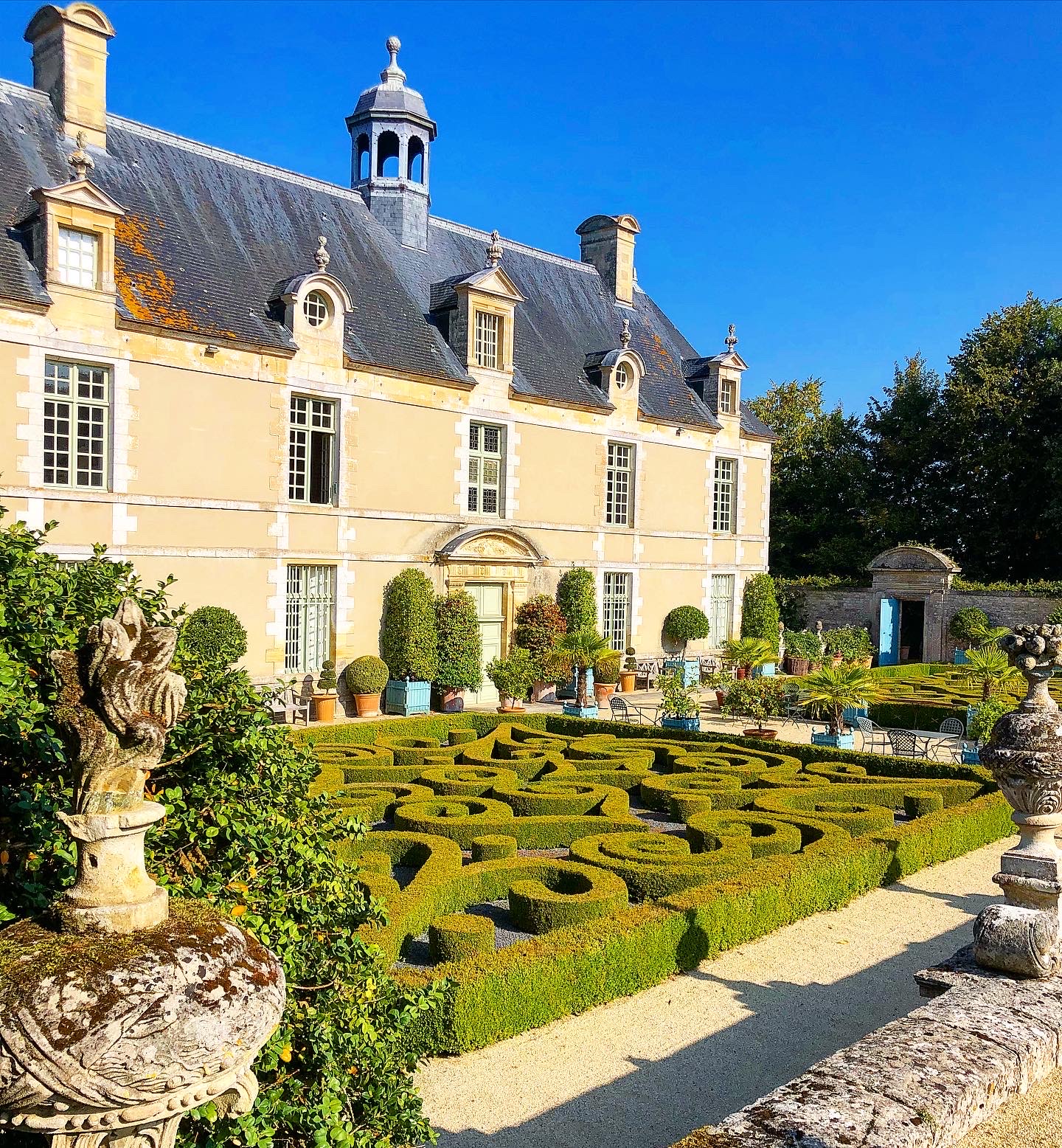
Sadly, the gardens of Brécy fell into disrepair with later generations of the Le Bas family and during the successive ownership of other French families and even a French actress. Miraculously, the area escaped the bombing and degradations of WWII but it was not until 1955 that owner and novelist Jacques Lacretelle would start Brécy’s garden renaissance. He began by clearing out the weeds and brambles that smothered this once beautiful Eden and by refurbishing the original terraces and exterior design elements.
In 1992, the Château and Gardens of Brécy saw the true modern rebirth of the property with its new owners Didier and Barbara Wirth. The Wirths had had their eye on a gorgeous estate in Burgundy for quite some time. They were in fact in the middle of negotiations to finally buy it when they received a call from famous French fashion designer and friend Hubert de Givenchy. Givenchy let them know Brécy was available for purchase. Didier and Barbara immediately went to see the property and bought Brécy within the week. It was a match made in French heaven.
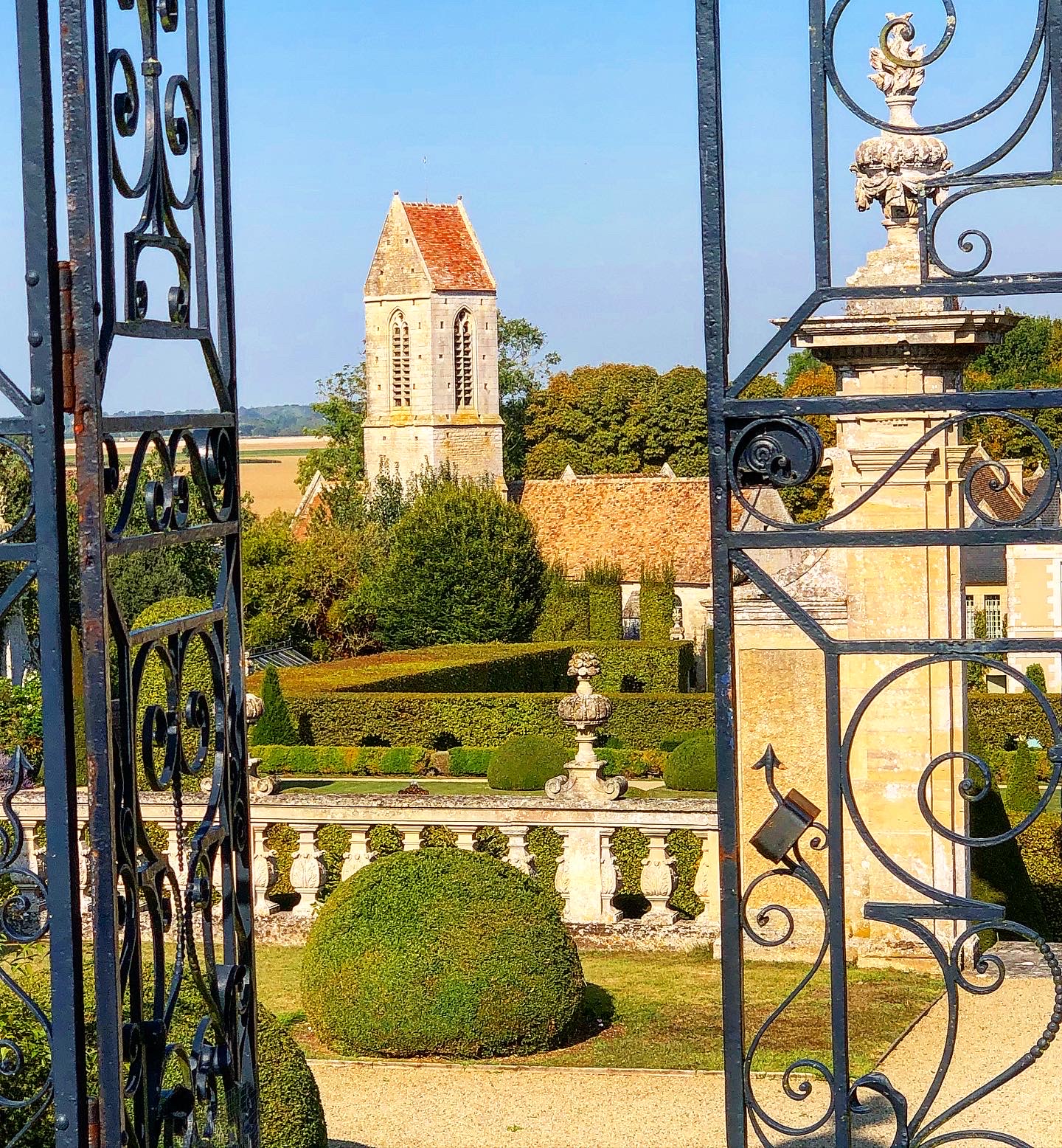
When the Wirths began the complete, painstaking reworking of the château and gardens, there were almost no trees surrounding the house. They realized that planting trees was urgent if they wanted to see them flouish and reach maturity in their lifetime. The garden masonry including stairs and walls needed to be repaired due to water damage. Extensive drain systems were installed, and electrical lines were buried to preserve the pristine views. The Wirths even raised the hill leading up to the eastern sky from the house for full dramatic effect. The 14th century village church of Sainte Anne which forms part of their property was repaired and restored. Then came thoughtful planning and execution of the interior garden spaces into an exquisite whole, followed by extensive maintenance. As any gardener knows, to keep up such a garden is a serious labor of love.
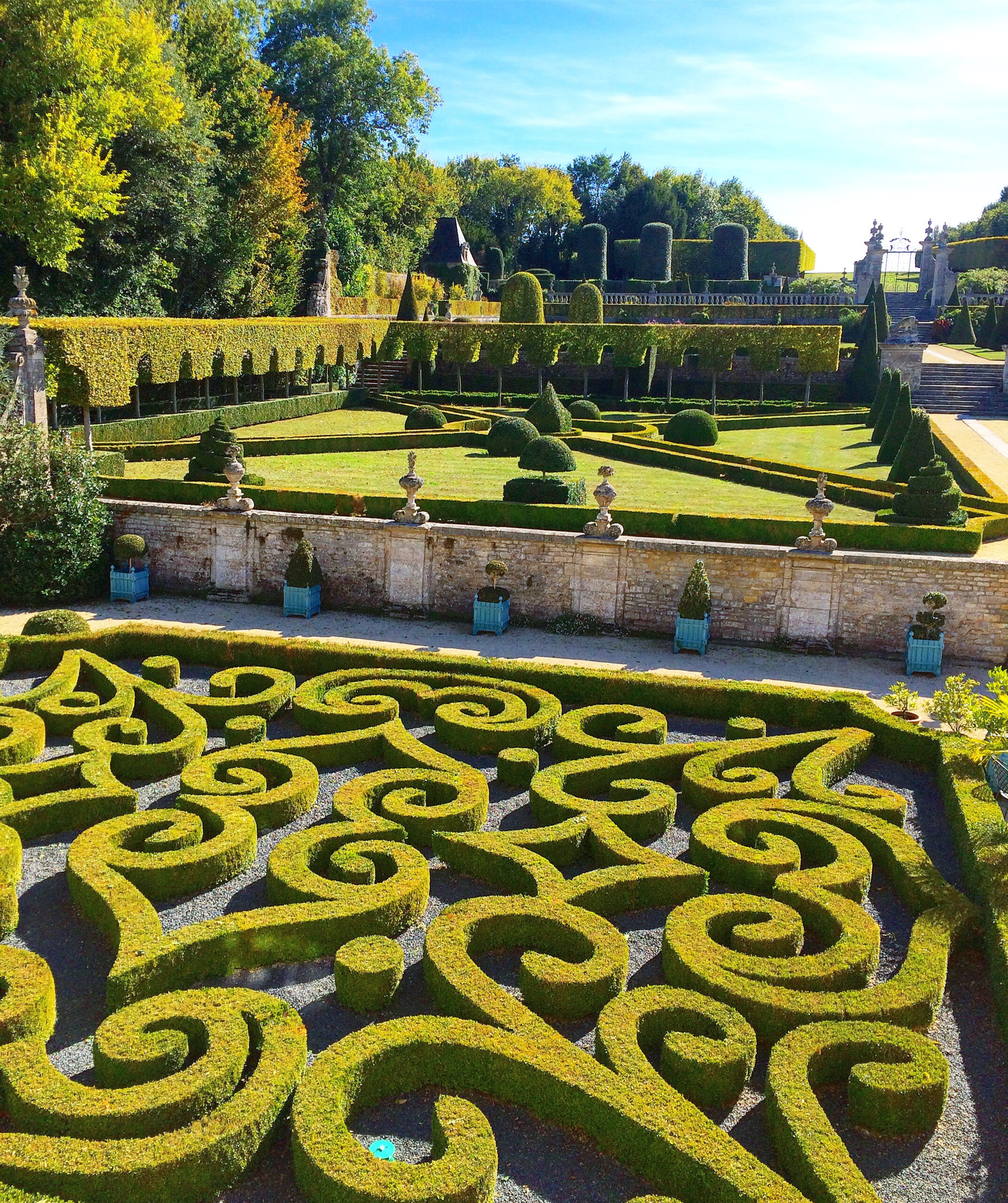
Today, the Wirths’ love of Brécy has come to full fruition. Each of the four succesive garden terraces is a work of art unto itself. Topiaries and hedges of yew, boxwood and hornbeam give structure, symmetry and line to the green spaces. Clouds of hydrangeas, roses, clematis form eye-catching arrangements. Agapanthus, iris, lily and hellebore adhere to the white, green, blue color palette established by Barbara. Rare plants abound making for good conversation pieces. The signature blue planters by the masterful Jardins du Roi Soleil , supplier of the original Versailles planters, imitate the beautiful blue of the sky. And the extravagant Italianate balustrades, decorative sculptures with fruit and floral motifs and dynamic carved lions all serve to enhance the theatrical visual experience that is Brécy.
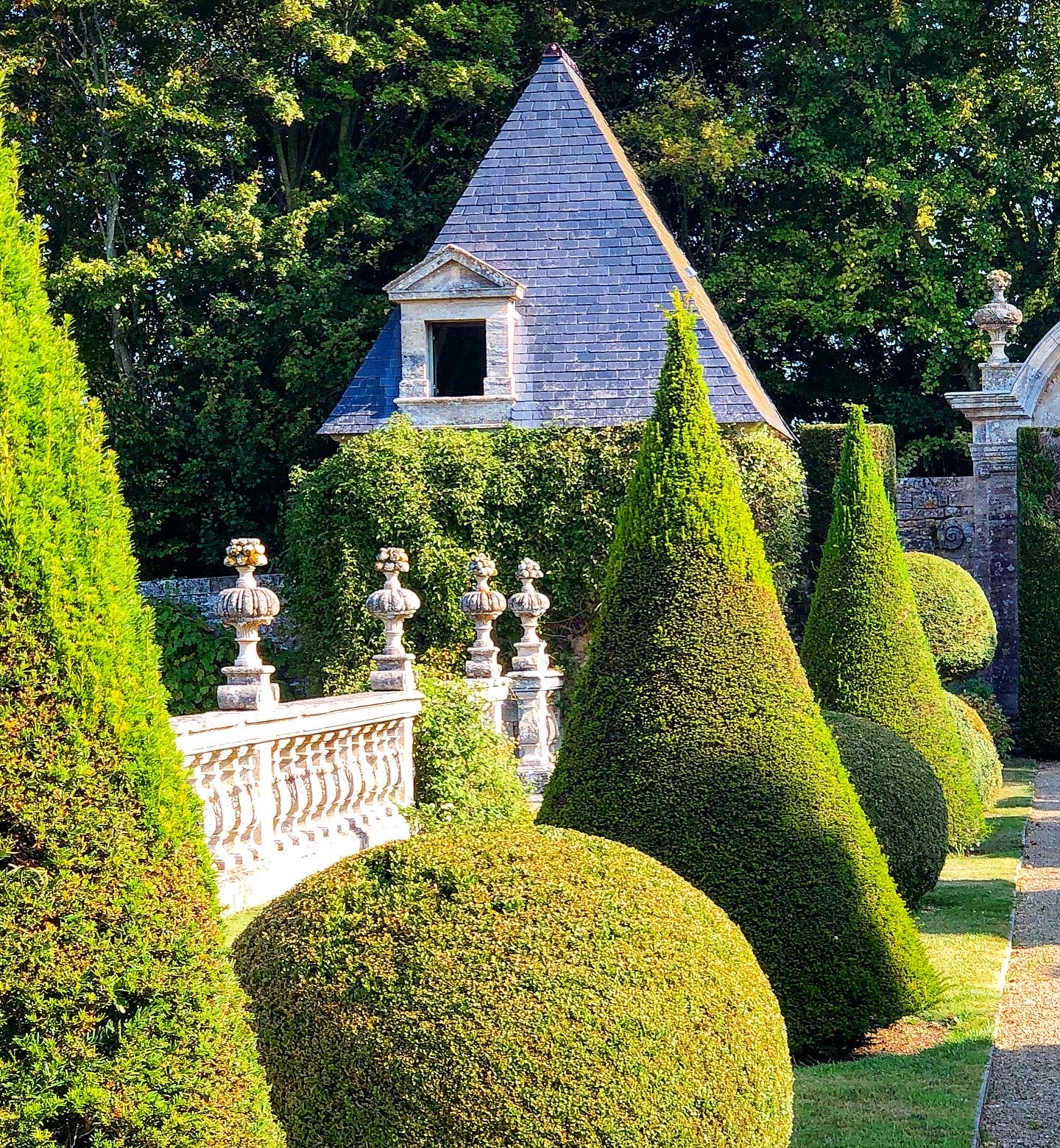
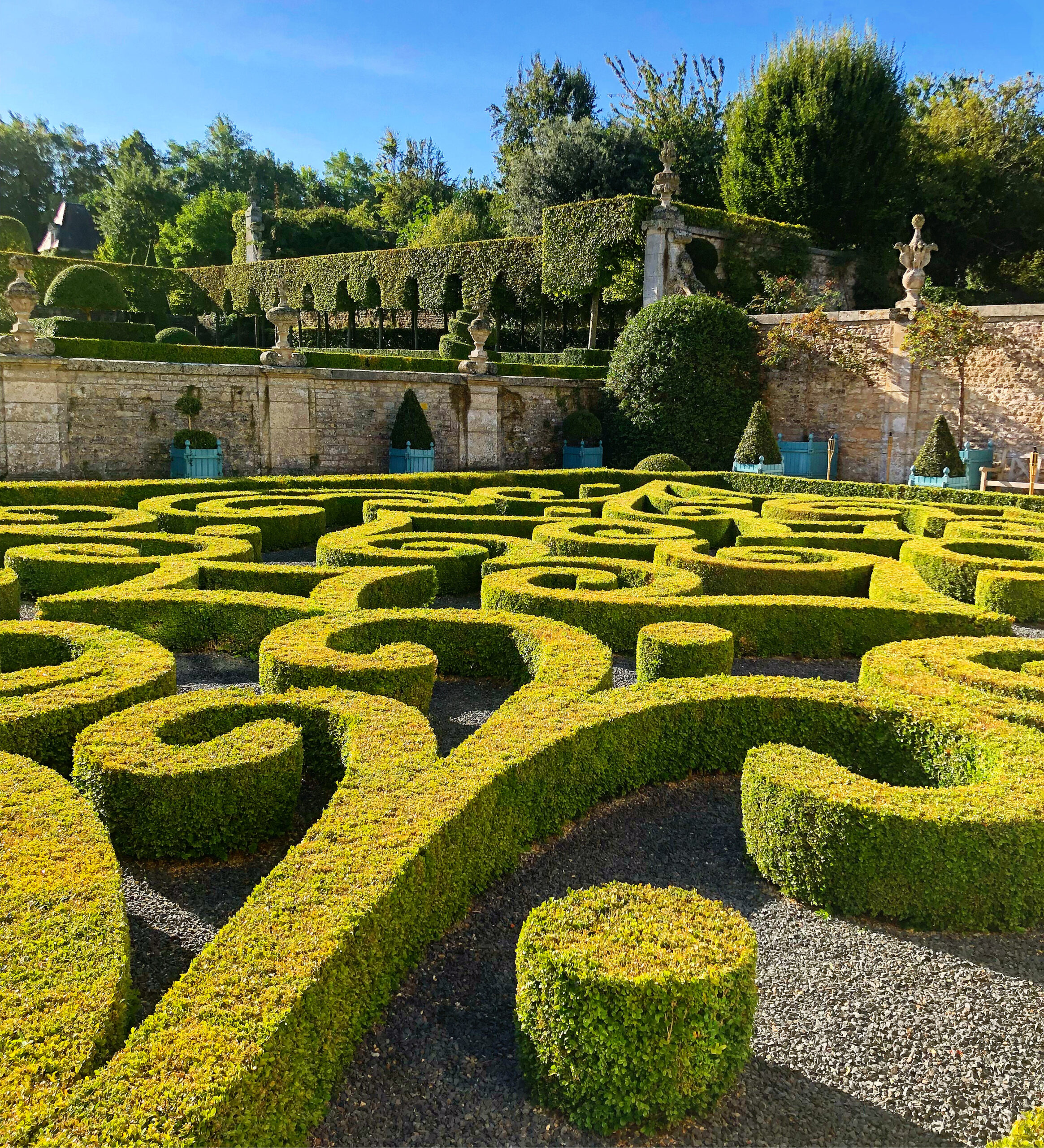
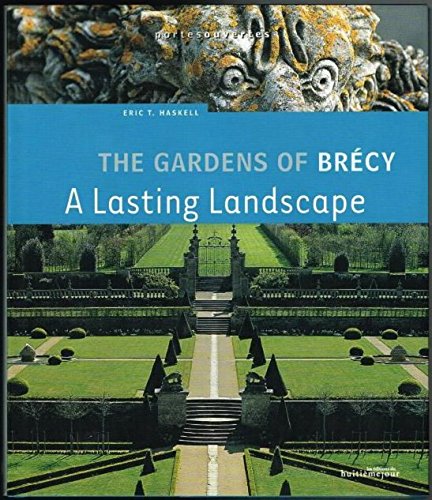
Serendipitously, I first ‘visited’ Brécy in 2008 by way of Texas. I was participating as one of several speakers on a garden lecture panel at the Dallas Arboretum. One of our fellow presenters was Dr. Eric Haskell, French studies professor and author of several works on French gardens. He took us all on a spectacular illustrated journey to Brécy and recounted his recent research that had resulted in the lovely book ‘The Gardens of Brécy, A Lasting Landscape’ . He gifted me with a copy of this beautiful volume which cemented Brécy as part of my France garden vocabulary. I have visited the real version many times since – each time I step into this verdant domain, I feel immediately refreshed and revived.
How does one visit the Chateau de Brécy today? The gardens are open to the public several afternoons each week from Easter to the end of October. I highly recommend seeing it in the morning when the early light flows down the hill and terraces filling the gardens with sun and warmth. Even more ideally, Brécy is best seen in the company of Monsieur Wirth himself; unfortunately, Madame Wirth passed away a few years ago due to illness. Each year on our French Affaires special tours of Normandy, we are treated to a private visit of the gardens with Monsieur Wirth. As he leads us through each garden room, his eyes light up and he tells the marvelous stories and moments that brought this refined masterpiece into being.
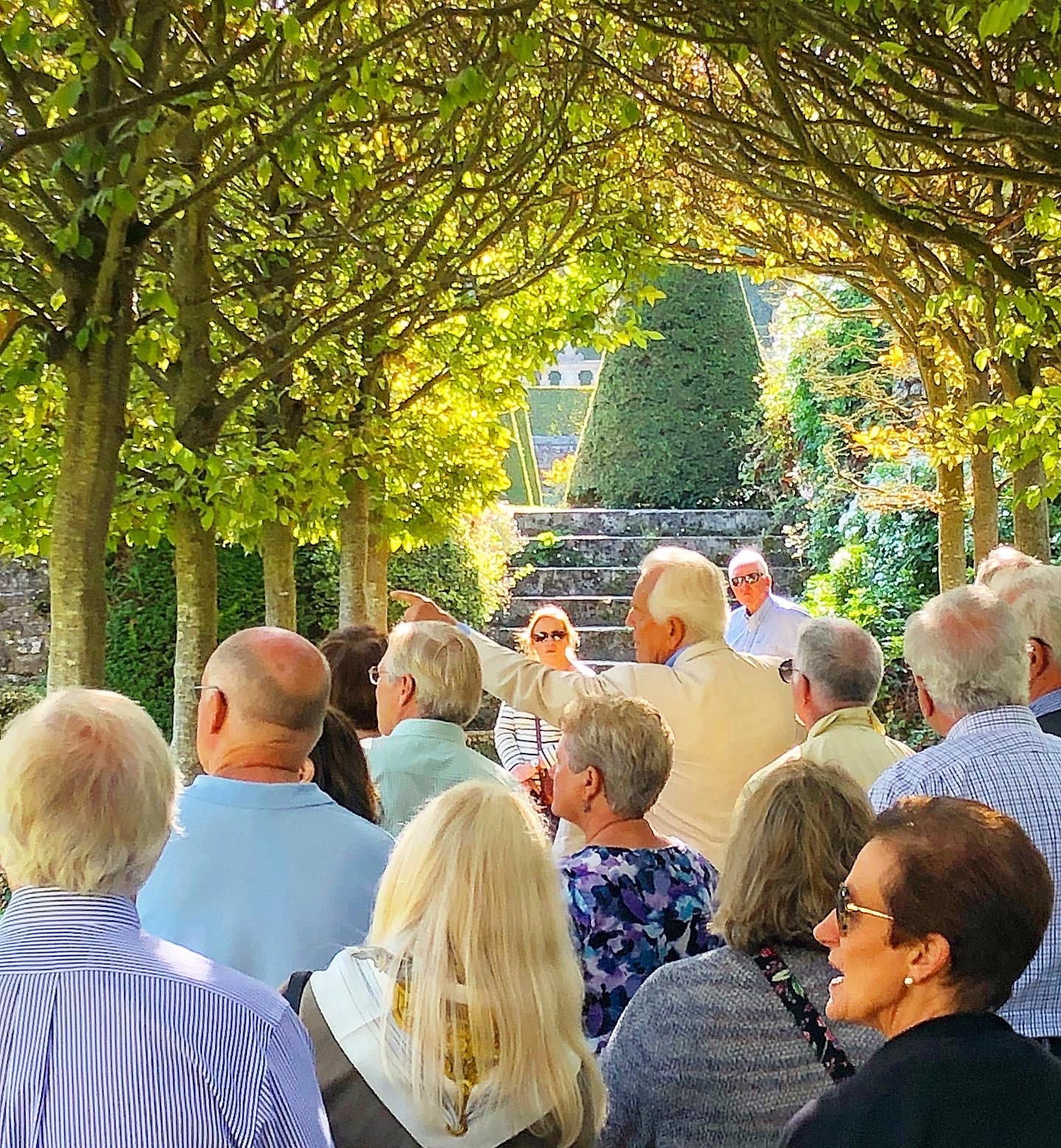
On more than one occasion, M. Wirth has invited us into his home to tour the luminous rooms and gaze upon the gardens from the windows. And extra specially, we’ve even had peeks into the inner sanctum – the remarkable library of thousands of garden books covering all types of gardens and all regions of the world. It is truly a sight to behold. Fittingly, the family received permission from the French government for Barbara Wirth to be buried on the property (normally in France, burials are reserved for cemeteries) so her spirit still resides in this extraordinary place she loved so much.
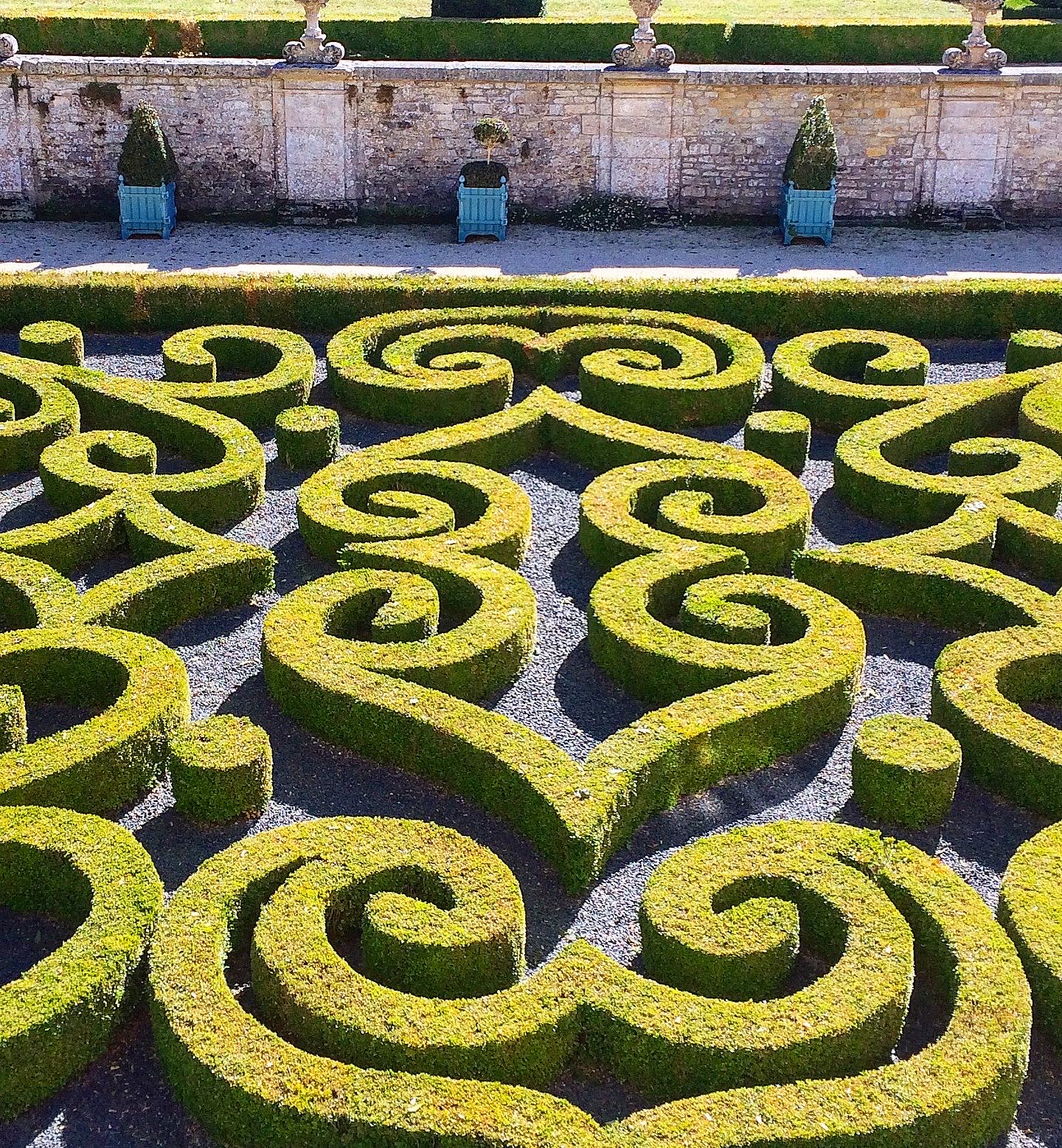
The Wirths’ passion, dedication and herculean efforts over the past almost three decades have restored Brécy to its original glory and even beyond. Today, Brécy represents the epitome of garden poetry and genius and continues to garner accolades as France’s most beautiful small-scale formal garden. The property has rightly earned the distinctions of “Monument historique” and “Jardin remarquable.” Twentieth century Norman writer Jean de La Varende declared himself fascinated by «l’inexplicable magnificence» – “the inexplicable magnificence” – of Brécy in his work on Normandy châteaux. He wrote of his visit: «La cour s’ouvre, enclose, une enceinte de ferme malgré l’arc de triomphe et, derrière, s’étendent les terrasses qui, comme des marches immenses, s’élèvent pas à pas sur la colline. Bien faible dénivellation mais à qui la succession de trois ou quatre terre-pleins confère une émouvante majesté. On s’ouvre sur le ciel.»
“The enclosed courtyard opens onto what’s really a farmyard despite the impressive triumphal arch entrance. Behind the house, the garden terraces extend upward step by step like immense stairs going up the hill. There’s not an enormous change in ground level but the quick succession of these three or four earthly plaforms conveys a truly moving majesty. Everything opens up to the sky.” Well said, M. de La Varende.
Château de Brécy, 14480 Saint Gabriel Brécy FRANCE
The Gardens of Brécy: A Lasting Landscape (2007), Eric Haskell. Huitieme Jour Editions. Books available for purchase on site at the garden bookshop or online for secondhand editions.

Hi, we miss y’all here in dallas! Could I get more information on this trip, availability and pricing ?
Thanks
Teresa
Bonjour Teresa! So good to get your note. We miss you all too! Would love for you all to join us in Normandy. I’ll follow by email.
Take care,
Elizabeth
I too would like info on upcoming trips and pricing. Thank you, Beverly
Vos photos donnent envie, une merveille !
5 avril 2021. Greetings, Elizabeth! Le Cene ou La Cene? My Larousse calls it feminine. Question for the experts: When does le lavement mean enema? The cleric speaking of Holy Week in the video from N-D de Paris, refers to “le lavement des pieds.” Again, my Larousse confuses me on usage. ‘Love the photos in your blog! S. R. * * * * *