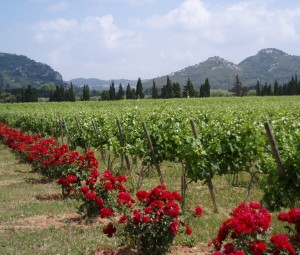
One thing I love about many French cookbooks—and I mean cookbooks about French cooking in French or in English—is that they often include two things: les menus (suites of dishes that go well together in one meal) and les produits de la saison (lists of seasonal fruits, vegetables, cheeses, meat and fish–yes, cheeses have seasons too!). They are noteworthy reminders of the French talent for balancing flavors and tastes, both within individual dishes and across the various plats (dishes) that make up one meal. These cookbooks also point to the significant culinary rewards of cooking according to the seasons.
Evidemment (obviously), to cook with fresh, seasonal ingredients, one has to shop accordingly. In Paris, every quartier (neighborhood) offers daily and weekly open-air marchés (markets). They are a culinary experience as well as a social one—people from all classes and all walks of life rub elbows in the common pursuit of good cooking and good meals.
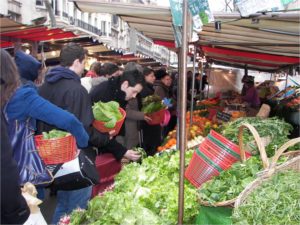
At these markets, you occasionally see vendors who grow their own produce, raise their own poultry, harvest their own honey, or make their own cheeses and sell these items directly to the public. My nostalgic side wishes that all the vendors would be selling goods they personally produce on their own farms. However, given modern commerce and the sheer volume of Parisian business, ce n’est pas possible (this is not possible). The majority of French market vendors obtain their products from the enormous wholesale food market outside Paris, Rungis (pronounced ruhn-jeesse in French).
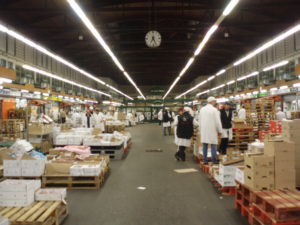
If the expression ‘wholesale food’ makes you think “bland” or “tired” food, you’re in for a whole other world in France. Rungis prides itself on being ‘le plus grand marché de produits frais du monde’ (the biggest market of fresh products in the world). And during my recent tour of the Rungis market, I would have to say that it’s pretty astonishing how fresh and beautiful all the products are given such an immense operation.
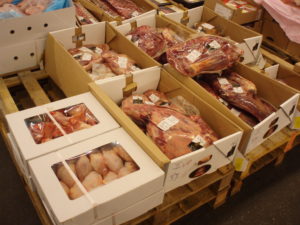
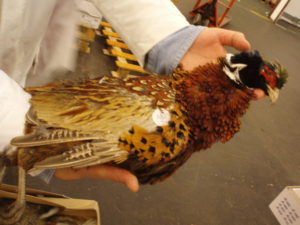
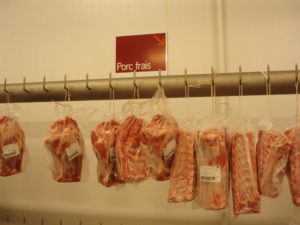
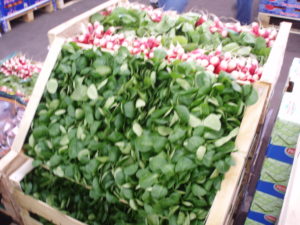
Rungis opened in 1969 after Les Halles, the main food market in Paris, was demolished. It does more than 7 milliards (billion) euros of business every year and is located south of Paris near the Orly airport, covering 232 hectares (nearly 600 acres) of land. There are multiple pavillons (buildings) that house the various food products: les produits laitiers (dairy products), les produits de la mer (seafood), les produits carnés (meat, fowl and game), les fruits et les légumes (fruits and vegetables), and les fleurs et la décoration (flowers and decor). While you will occasionally see a female or two working at the market, it is still primarily a male dominated line of work.
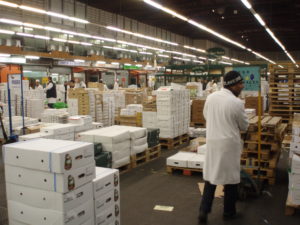
Touring Rungis is spectacular, though I must say it’s not an activity for the faint of heart. To supply daily the numerous food markets, supermarkets and restaurant chefs in the Paris region, the market opens at 2am and is nearly done by 8 or 9am. You have to get up in the wee hours and make the 45 minute or so trek by car from the center of Paris. Then you get to traipse through the cavernous warehouses that are kept chilled to keep products as fresh as possible. In addition, you have to put up with delayed gratification as you can’t buy anything you see. And visits to Rungis have to be specially arranged, so it takes some doing just to get in the place.
Despite the logistics, seeing Rungis is well worth the effort. It is the coming together of food growers, producers and distributors from all over France and from all over the world. And it is the heart of the daily culinary dance in Paris.
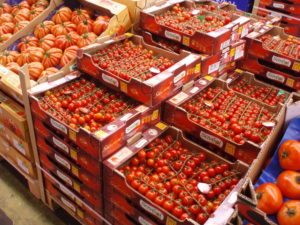
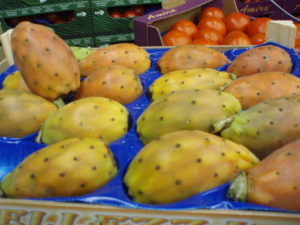
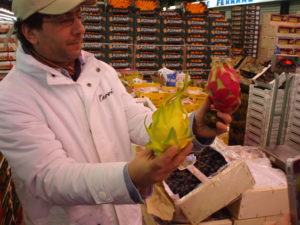
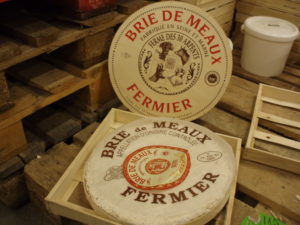
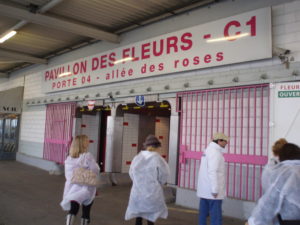
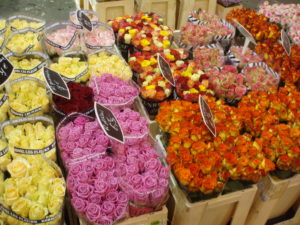
For your own visual tour of Rungis, take a look at the photos below. You’ll never think about food in Paris the same way again!
French Take-Out™ ~ La France à emporter
French markets are one of the most charming aspects of travel in France. In small towns or large cities, food markets, flower markets, and antique markets contribute to the social fabric of the community. There are also yearly markets or festivals that are worth planning your French trips around such as the Foire aux piments (Pepper Festival) in the Basque country, the Fête du fromage (Goat Cheese Fair) in Provence, and the Journée de la Truffe (Truffle Day) in southern France.
To find out more about specific French markets and festivals to visit all over France, join us for the French Affaires ‘Tour de France’ Lecture Series this spring. In this unique program, we’ll be ‘traveling’ to the best parts of France to discover the history, art, architecture, culture, landscapes, gardens, cuisine, wine, and of course, markets, of various French regions. The richly illustrated lectures, discussions and food tastings will make you feel like you’ve been to France. Our program also includes further reading and film lists, as well as museum, hotel, and restaurant suggestions for all over France.
Click here for complete series details and to register–there are a few seats left for this special French travel experience!
Lecture 1 – Saturday, January 29: Welcome to the ‘Tour de France’ Lecture Series; Introduction to the Geography of France; Paris, the Ile de France & Champagne
Lecture 2: – Saturday, February 26: Normandy, Brittany & the Loire Valley
Lecture 3 – Saturday, April 2: Burgundy, Jura & Savoy
Lecture 4 – Saturday, April 30: Provence, the Riviera & Corsica
Lecture 5 – Saturday, June 4: Southwest France – Bordeaux, Médoc & the Pyrenees